
Gobble Sticky field study
A field study testing the performance of Gobble Sticky documents statistically significant increases in capture rates across multiple species and environments.
The evaluation was conducted by Emil Lindgren, a fisheries scientist specializing in acoustic telemetry and fish tracking, and who serves as a consultant for the Swedish University of Agricultural Sciences (SLU).
Lindgren's testing protocol relied on a data-driven methodology rather than anecdotal observations. Logs were kept throughout the 18-month period recording catch statistics, environmental variables, and behavioral observations via sonar. The goal was to evaluate the attractant's effectiveness based solely on empirical evidence.
The data indicates that Gobble provides the highest statistical effect during periods of low activity. Especially when the fish follow the bait without biting. Under these conditions, Lindgren recorded a 52% increase in catch rates compared to untreated control baits.
The field study was done in several scenarios:
Done:
Controlled multi-boat trolling (Mälaren, zander): During a targeted zander project, multiple boats trolled identical wobblers at fixed depth intervals. The boat using Gobble PRE 4.0 accounted for approximately 68% of the total recorded catch. Sonar data confirmed that fish that initially showed passive following behavior switched to biting when Gobble Sticky PRE 4.0 was applied to the baits.
Salmon:
Tagging of salmon, (Vättern, salmon):
In a salmon tagging operation, two boats fished parallel routes with identical gear. On the vessel where the bait on one side was treated with Gobble Sticky SAL 2.4, the specific side gave a 28% higher catch rate compared to untreated control bait.
Expedition data (Mongolia, taimen and Amur pike):
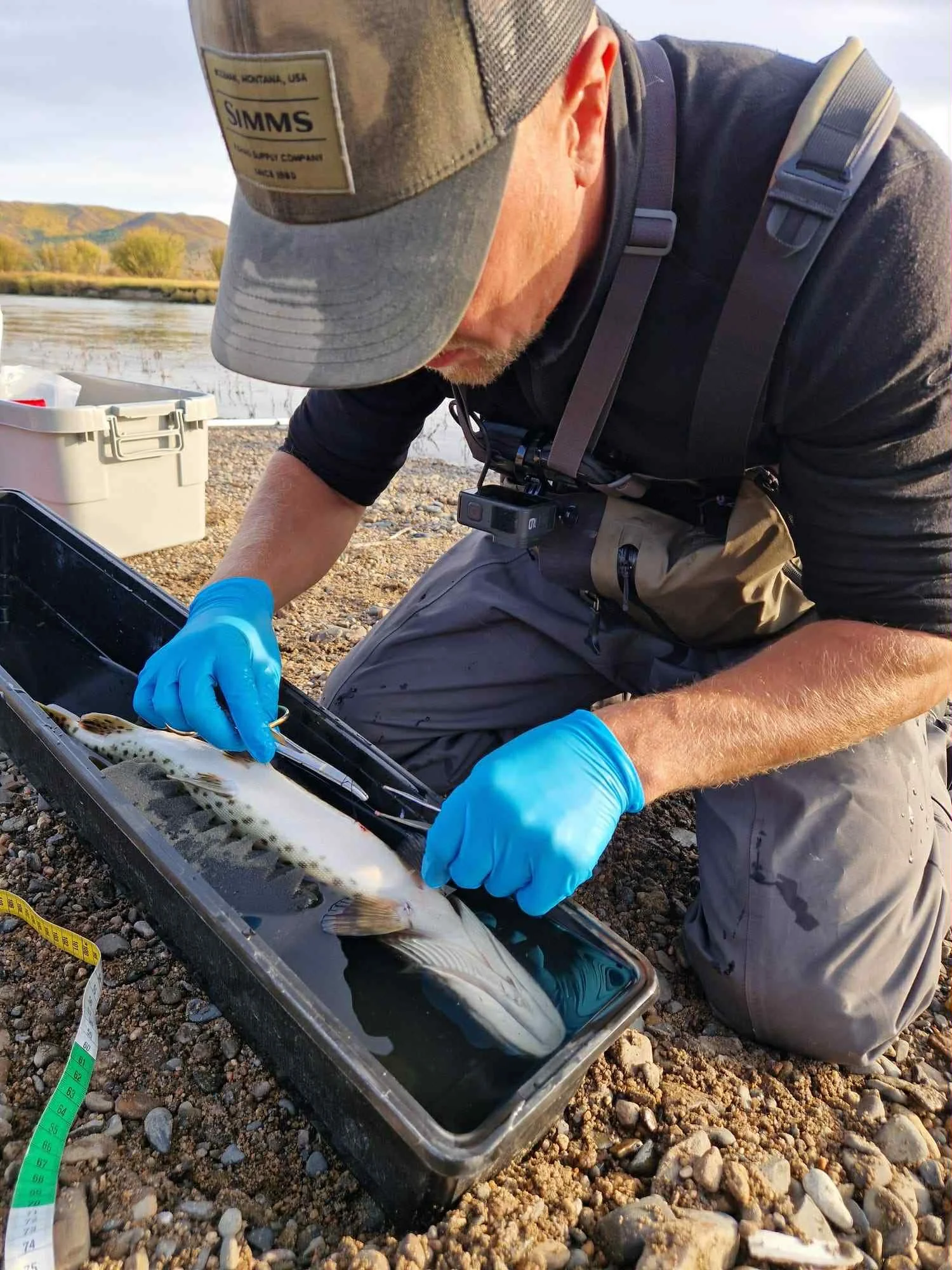
To test its effectiveness in new environments, Gobble SAL was used during a four-week tagging project in Mongolia. The one fisherman who used the attractant accounted for 70 out of a total of 100 tagged fish, showing good effectiveness across species, also in new environments.
Zander:
Recreational fishing (zander):
During a period of low activity, a controlled count resulted in a total of 31 zander being caught. Of these, 21 were caught on baits treated with Gobble PRE and Gobble BM, while only 10 were caught on untreated control baits.
Conclusion:
Based on the empirical data collected over 18 months, Lindgren concluded that Gobble Sticky consistently provides measurable improvements in catch efficiency, particularly by acting as a critical variable when fishing activity is low. The data supports its use as a reliable functional tool for both professional work and recreational sport fishing.
The data from Lindgren supports the findings of Gobble Baits' user survey from April 2025.
Gobble Baits analyzed data from 127 independent anglers (122 of whom had actively tested the product). This study documents the Gobble Stickys effectiveness in uncontrolled, real-world situations:
67.2% of all respondents reported an increase in cutting and/or capture rate (where 27.0% were unsure and 5.7% reported no effect).
Among respondents who reported catching two or more species, the positive response rate increased to 78.4%. For commonly reported species such as cod and trout, catch rates increased by up to 80%.
The product achieved an average satisfaction score of 4.07/5.00, with >75% of respondents giving it 4 or 5 out of 5.
